
The pressure switch acts as the "brain" of your well system. It monitors water pressure inside the pressure tank and tells the well pump when to turn on and off.
For example:
When water pressure drops to 40 PSI, the switch turns the pump on.
When pressure reaches 60 PSI, the switch turns the pump off.
This cycle happens hundreds or even thousands of times each month.
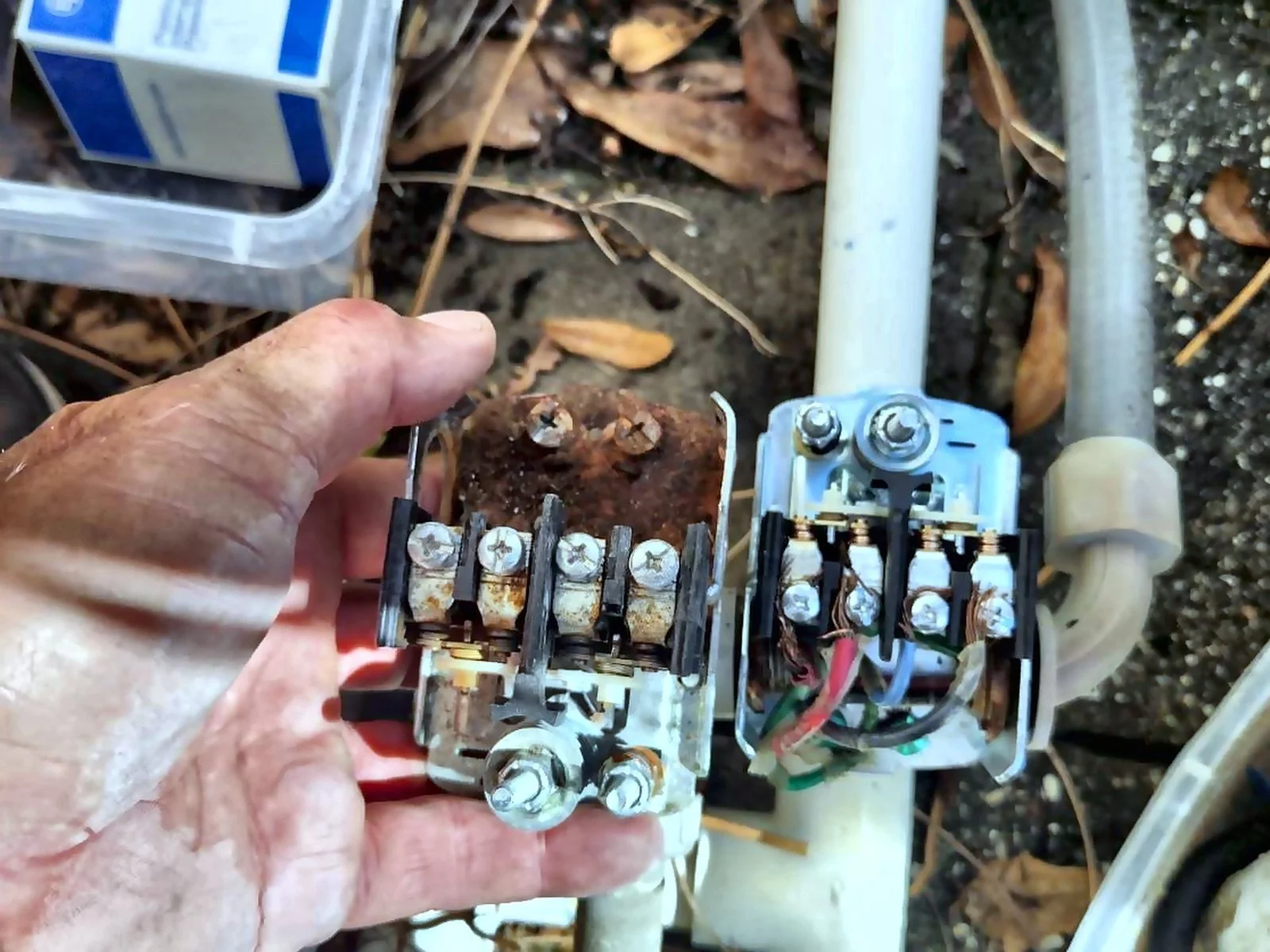
Why Pressure Switches Fail
Florida's heat, humidity, rain, insects, and outdoor installations create the perfect environment for pressure switch problems.
Common issues include:
✔ Corroded electrical contacts
✔ Burned contact points from electrical arcing
✔ Ants and other critters (like lizards) nesting inside the switch
✔ Rust buildup from moisture exposure
✔ Pressure port clogging from sediment or iron buildup
✔ Loose electrical connections
When these problems occur, the switch may fail to send power to the well pump, leaving you without water.
The Cost of Waiting
A pressure switch is one of the least expensive components in a well system, but when it fails it can mimic much larger problems such as:
Bad well pumps
Failed control boxes
Pressure tank issues
Electrical failures
Water supply interruptions
Many homeowners panic when they suddenly have no water, only to discover the problem was a worn-out pressure switch.
When Should a Pressure Switch Be Replaced?
There’s no set schedule for replacing a pressure switch. We replace it when it’s worn, burned, or not working right, and a quick inspection tells us when that is.
Improved Reliability
A switch in good shape lowers the chance of losing water without warning.
Protects Your Well Pump
Failing switches can cause pumps to short cycle, overwork, or run improperly, shortening pump life.
Prevents Emergency Service Calls
Catching a worn switch early costs less, and it’s a lot less stressful than having no water at all.
Provides an Opportunity for a Full System Inspection
While we’re checking the switch, we also look at:
Pressure tank condition
Pressure gauge accuracy
Wiring connections
Well piping
Filtration equipment
Signs of leaks or corrosion
Signs Your Pressure Switch Needs Attention
Clicking or chattering at the switch
The pump turns on and off over and over (short-cycling)
No water, or the pump won’t turn on
The pump won’t shut off
Contacts that look pitted or burned
A clogged pressure-switch tube or nipple, which is common with sediment or iron
What an inspection looks like: We check the contacts, the wiring, the cut-in and cut-out pressures, and the small tube under the switch. If the switch is still good, we leave it alone. If it’s worn, we replace it. That’s how we decide, not by the calendar.
When to call: If you notice any of these signs, or you’ve lost water, call us at (239) 541-0119. A real person will answer.
A Small Investment That Protects Your Entire Well System
Think of a pressure switch like the batteries in a smoke detector. It may seem small, but when it fails, the consequences can be significant.
At Good Ole' Plumbing Services, we inspect and replace pressure switches to help homeowners avoid costly repairs and unexpected water outages.
If you're experiencing intermittent water pressure, clicking noises from your pressure switch, pump cycling issues, or simply want peace of mind, it may be time for a professional well system inspection.
Well Systems Are What We Do.
Good Ole' Plumbing Services
Phone: (239) 541-0119 | Email: GoodOlePlumbingServices@gmail.com | www.goodoleplumbingservices.com | Lic. #CFC1429560
